
Melissa Askew found a wonderful way to combine her ideas with the content of a video. She shows this clip (just 2 and a half minutes long) and annotates it with observations of the fallacies as they come along. The descriptions are clear and show excellent command of the terms. Great work!
Follow the link to see how it works!
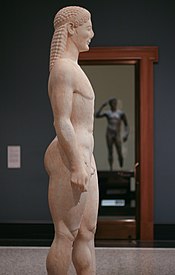
Samyukta Saklani presented a fascinating real-life situation in describing this remarkably realistic ancient Greek Kouros statue. Her post explains how the intuition of many renown scholars led the curators of the Getty Museum to doubt the authenticity of this statue. Since purchasing the Kouros, the Getty has continued to study it, finding more and more reasons to doubt its authenticity, but no definitive proof. Her post demonstrates the value of intuition -- informed by other ways of knowing, of course -- and also provides an interesting account of how art historians and other scholars have treated this object.
Have a look at her blog at this link!

Alissa Thakker took a very popular topic -- US president Donald Trump's logical fallacies -- and presented them in a logical, systematic way. Alissa's post does exactly what all critical listeners and readers need to do all the time: it inspects the claims, compares them to facts, and then evaluates them critically, using the language of logic. Many students worked with the same material, but few have done so as effectively.
Check out her blog at this link!

Read it for yourself at this link!

No comments:
Post a Comment